





Vitamina K
We are China's leading professional raw material supplier with more than 10 years of export experience, providing manufacturers with one-stop supply solutions from raw materials to delivery.
We work with a range of logistics providers to provide our customers with fast, reliable, cost-effective shipping and distribution services, with delivery times typically being 1-2 weeks.
Vitamin K is a group of vitamins found in some green vegetables. Vitamins K1 (phytonadione) and K2 (menaquinone) are commonly available as supplements.Vitamin K is an essential vitamin needed by the body for blood clotting, bone building, and other important processes. It's found in leafy green vegetables, broccoli, and Brussels sprouts. The name vitamin K comes from the German word "Koagulationsvitamin."People commonly use vitamin K for blood clotting problems or for reversing the blood thinning effects of warfarin. It is also used for osteoporosis, athletic performance, breast cancer, diabetes, and many other conditions, but there is no good scientific evidence to support most of these other uses.


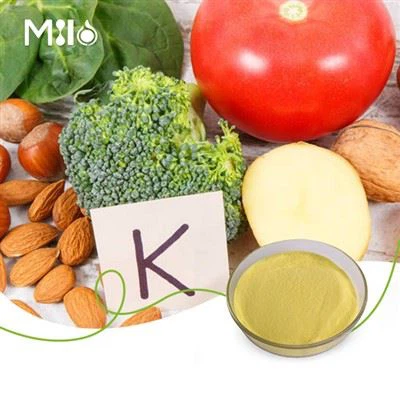


One of vitamin K's most important jobs is to make four of the 13 proteins needed for blood clotting. Blood clots stop your injuries or wounds from bleeding so they can heal. The "K" comes from the Danish and German word koagulation (coagulation) or clotting.This is a great benefit of vitamin K. But it also means that you need to be careful. People taking blood-thinning drugs, such as warfarin (Coumadin®) anticoagulant medication, shouldn't take vitamin K supplements or consume large amounts of vitamin K without talking to their healthcare provider. Vitamin K can interfere with the effectiveness of these medications."In most cases, it's a matter of maintaining steady vitamin and medication levels,"says Zumpano."A sudden change can cause dangerous bleeding or blood clots."
Vitamin K benefits heart health in several ways. The body needs Vitamin K for the activation of several proteins that inhibit the buildup of calcium in blood vessels, which can help prevent heart disease.Arterial calcification contributes to atherosclerosis, a term used to describe the thickening or hardening of the arteries caused by a buildup of plaque. Atherosclerosis is the main cause of heart disease.Vitamin K also helps improve the elasticity of arteries, which support and protect heart health.A recent review that included 14 studies found that vitamin K supplementation significantly reduced coronary artery calcification scores and slowed the progression of coronary artery calcification.
Insulin is a hormone that helps shuttle blood sugar into cells where it can be used for energy or stored for later use.10 Osteocalcin, which is dependent on vitamin K, stimulates insulin secretion from the pancreas and enhances the insulin sensitivity of muscle cells.Studies show that people who consume vitamin K-rich diets have better blood sugar control and are more sensitive to insulin compared to people with lower vitamin K intakes.Other research suggests that supplementing with vitamin K may enhance insulin sensitivity and blood sugar control in certain populations.

Vitamin K1:
Vitamin K2 MK-4: Menaquinone-4
Vitamin K2 MK-7: Menaquinone-7
They should probably have different names, but we're stuck with these for now! Of vital importance is that Vitamin K1 and K2 are completely different. Vitamin K2 MK-4 and MK-7 are also distinct from one another.
Adequate vitamin K status may help to prevent bone fractures and protect against osteoporosis, especially when coupled with sufficient magnesium, calcium and vitamin D intake. Long-term vitamin K2 supplementation may be beneficial for use in treating postmenopausal osteoporosis, as evidenced by studies that suggest it may slow down its progression.
Carboxylation is required to prevent cardiovascular and collagen calcification in the body. Higher levels of all uncarboxylated proteins are noted to contribute to the calcification of blood vessels and cartilage, which can exacerbate the severity of coronary heart disease and the risk of a heart attack. Vitamin K2 supplementation is associated with limiting calcification of the coronary artery, reducing the risk of coronary heart disease and decreases in related mortality. Additionally, elevations of uncarboxylated proteins have been found in samples from patients with osteoarthritis and fibrotic disorders.
Preliminary studies have shown that vitamin K can help to speed up wound healing when applied topically as 1% of an ointment. In rats, deficiency lowered the skin collagen content, which suggests that maintaining adequate intake may protect the skin from rapid aging.
Nephrocalcin is another carboxylated protein that regulates calcium binding in the kidneys. When vitamin K status is normal, it binds to calcium oxalate and inhibits its crystallization and deposition in the kidneys. Patients with kidney stones display elevated levels of uncarboxylated nephrocalcin, yet research is lacking with regard to using Vitamin K in order to prevent kidney stone formation. Vegetarian diets high in vitamin K-rich foods are noted to help lower kidney stone formation in those at risk.
Those with type 2 diabetes may be at risk for vitamin K deficiency and may benefit from supplementation. A few studies suggest that relatively high doses of vitamin K2 (360mcg daily as MK7 for 12 weeks) substantially improved markers of glycemic control and enhanced insulin sensitivity without any adverse effects.
A small body of evidence suggests that vitamin K is vital for optimal cognition and may have a place in the prevention of neurodegenerative diseases. Vitamin K is important for the production of sphingolipids, which are crucial fats that comprise large portions of neuronal cell membranes that support neuronal cell growth and are involved in myelination. The activation of various vitamin K-dependent proteins, including anticoagulant protein S, have also been associated with lowering neuroinflammation. Lastly, vitamin K supplementation may help to protect against cognitive deficits seen in those on long-term warfarin.

Shaanxi Milo Biotech Co., Ltd is a global, technical innovation-led and ultimate services-based company professional in Nutrition, Health and Supplements.Our mission is to benefit our customers, spanning from human nutrition, animal nutrition, to natural plant extracts, natural pigments, vitamins, amino acids, etc.


